
Featured
One (for sax quartet)
Hello, I'm Walter
You may know me as Wally. That works, too. Just don't call me Walt.
I make things: mostly music. Also games, art, movies, gadgets, stories, software, and other things worth making. Someone, if so inclined, will label them eventually.
This is my archive. As I digitize and upload decades of work, I’m building it in real time, adding at least one thing a day (or so) with no set criteria for what gets archived next.
Each new entry is logged in the feed below, capturing my thoughts on whatever it is, the process of archiving it, and the circumstances of how I probably stumbled upon it while looking for something else.
I can either keep making things or figure out where I put the last one. Historically, I’ve chosen the former. So naturally, I solved the problem by making yet another thing.

Latest
Westworld

Log


Well, hello again. It's been... a while. Exactly six months and fourteen days, if anyone's counting (and I wasn't, until I just did). My grand plan of "adding at least one thing a day (or so)" has clearly evolved into "or so" territory. But here we are, and I'm finally uploading something new to the archive. Today it's two short music loops I wrote a few years back for a slot game called Juicy Loot, while I was working remotely for IGT. Base Game Music – the everyday groove that keeps the reels spinning. Bonus Music – what kicks in when things get exciting. Both are unapologetically funky, steeped in that early-80s vocoder-driven R&B/funk vibe. Think Zapp & Roger: heavy synth bass, rubbery grooves, talkbox-style vocals (courtesy of my own voice), and a general sense that leisure suits might make a comeback any day now. I had an absolute blast writing these. The bonus loop even got lyrics sung by yours truly: Gimme some o' that, some o' that Juicy LootGonna line the pockets of my leisure suitTastes so sweet, drippin' all over my feetMy Juicy Loot, it keeps me so repleteThe game producer loved them, which felt great. But the real payoff came months later at a random industry event here in London. I introduced myself to someone from the London office I'd never met before (remote life), and before I could finish saying my name, he grinned and started reciting the lyrics back to me. Apparently the tracks had made the rounds internally. Still one of the more satisfying moments in my music-for-games career. Anyway, nothing earth-shattering here—just a couple of fun, fruity loops from the vault. But it's something. And it's uploaded. Back tomorrow? Let's not jinx it. But I'm aiming for momentum.
Juicy Loot
Well, hello again. It's been... a while. Exactly six months and fourteen days, if anyone's counting (and I wasn't, until I just did). My grand plan of "adding at least one thing a day (or so)" has clearly evolved into "or so" territory. But here we are, and I'm finally uploading something new to the archive.
Today it's two short music loops I wrote a few years back for a slot game called Juicy Loot, while I was working remotely for IGT.
- Base Game Music – the everyday groove that keeps the reels spinning.
- Bonus Music – what kicks in when things get exciting.
Both are unapologetically funky, steeped in that early-80s vocoder-driven R&B/funk vibe. Think Zapp & Roger: heavy synth bass, rubbery grooves, talkbox-style vocals (courtesy of my own voice), and a general sense that leisure suits might make a comeback any day now.
I had an absolute blast writing these. The bonus loop even got lyrics sung by yours truly:
Gimme some o' that, some o' that Juicy Loot
Gonna line the pockets of my leisure suit
Tastes so sweet, drippin' all over my feet
My Juicy Loot, it keeps me so replete
The game producer loved them, which felt great. But the real payoff came months later at a random industry event here in London. I introduced myself to someone from the London office I'd never met before (remote life), and before I could finish saying my name, he grinned and started reciting the lyrics back to me. Apparently the tracks had made the rounds internally. Still one of the more satisfying moments in my music-for-games career.
Anyway, nothing earth-shattering here—just a couple of fun, fruity loops from the vault. But it's something. And it's uploaded.
Back tomorrow? Let's not jinx it. But I'm aiming for momentum.
Stardust. Today’s upload is a somewhat quirky cover I made around 2006 or 2007 of the jazz standard “Stardust,” a song I was borderline obsessed with at the time. Back then, I probably would’ve insisted—without hesitation—that it was the greatest song written in the 20th century. These days, I’m less inclined toward grand proclamations like that, but it still stands as an absolute songwriting masterpiece. One of the things I found particularly fascinating about “Stardust” is its original introduction—an extended, hauntingly beautiful passage that rarely appears in popular versions, especially those from the crooner era. In fact, most arrangements jump right into that iconic chromatic melody line, bypassing the intro entirely. Thankfully, my (totally legal!) Real Book included this overlooked intro, which I personally feel sets up the verse transition brilliantly. “Stardust” is simply masterful: its chord progression is extraordinary, and the way the melody weaves in and around these harmonies is something I’ve always found profoundly beautiful. In this particular cover, however, when the distorted guitars kick in, I was basically forced to simplify the harmonic content—distortion tends to muddy chords beyond basic intervals like fifths and thirds. But what’s remarkable is how well the melody itself implies the richness of the original chords, even with simpler accompaniment. Ironically, despite the somewhat pop-punk feel of this cover, I don’t have much affinity for punk music—or rather, it’s the punk ethos I’ve never resonated with, not necessarily the sound. But something about the raw, stripped-back style seemed to work here, even though it sharply contrasts with the gentle, lyrical introduction of my arrangement. Back then, I might have defensively called it “prog-adjacent,” probably because I was fronting an avant-garde progressive rock band and felt obliged to maintain my prog credentials at all costs. It does feature a few tempo shifts and time-signature changes—though, compared to the average miRthkon tune, it’s practically straightforward. This demo was never really intended for public ears. Originally, I’d planned to develop it into a proper miRthkon cover, but that never happened. Interestingly, Carolyn Walter—our longest-serving member, who played nearly every woodwind imaginable (except oboe)—once transcribed Artie Shaw’s iconic clarinet solo from his famous “Stardust” recording, at my request. I’ve always considered Shaw’s solo impossibly perfect—so perfect, in fact, that I’ve often wondered if it was composed rather than improvised. Recently, I even learned to play that same solo on guitar, and someday I’ll revisit this arrangement properly, incorporating Shaw’s solo in some way. Looking back at this demo, I’m amused to discover the distortion on my guitars was created entirely with Logic’s own built-in “Guitar Amp Pro” plugin—a pretty ancient amp modeler from the early 2000s that, surprisingly, still holds up quite well. I recorded the guitar parts on an Epiphone Dot Studio I’d recently purchased at the time, complete with truly terrible stock pickups, which I’ve long since upgraded. Yes, this recording has plenty of shortcomings—but apparently not enough to stop me from publicly sharing it today, so there’s that. Anyway, I’ve rambled enough. Click the link above and give a listen to my early-2000s quasi-pop-punk-prog take on “Stardust”—a candidate (perhaps) for the greatest song of the 20th century. Maybe.
(Maybe) The greatest song of the 20th century
Today’s upload is a somewhat quirky cover I made around 2006 or 2007 of the jazz standard “Stardust,” a song I was borderline obsessed with at the time. Back then, I probably would’ve insisted—without hesitation—that it was the greatest song written in the 20th century. These days, I’m less inclined toward grand proclamations like that, but it still stands as an absolute songwriting masterpiece.
One of the things I found particularly fascinating about “Stardust” is its original introduction—an extended, hauntingly beautiful passage that rarely appears in popular versions, especially those from the crooner era. In fact, most arrangements jump right into that iconic chromatic melody line, bypassing the intro entirely. Thankfully, my (totally legal!) Real Book included this overlooked intro, which I personally feel sets up the verse transition brilliantly.
“Stardust” is simply masterful: its chord progression is extraordinary, and the way the melody weaves in and around these harmonies is something I’ve always found profoundly beautiful. In this particular cover, however, when the distorted guitars kick in, I was basically forced to simplify the harmonic content—distortion tends to muddy chords beyond basic intervals like fifths and thirds. But what’s remarkable is how well the melody itself implies the richness of the original chords, even with simpler accompaniment.
Ironically, despite the somewhat pop-punk feel of this cover, I don’t have much affinity for punk music—or rather, it’s the punk ethos I’ve never resonated with, not necessarily the sound. But something about the raw, stripped-back style seemed to work here, even though it sharply contrasts with the gentle, lyrical introduction of my arrangement. Back then, I might have defensively called it “prog-adjacent,” probably because I was fronting an avant-garde progressive rock band and felt obliged to maintain my prog credentials at all costs. It does feature a few tempo shifts and time-signature changes—though, compared to the average miRthkon tune, it’s practically straightforward.
This demo was never really intended for public ears. Originally, I’d planned to develop it into a proper miRthkon cover, but that never happened. Interestingly, Carolyn Walter—our longest-serving member, who played nearly every woodwind imaginable (except oboe)—once transcribed Artie Shaw’s iconic clarinet solo from his famous “Stardust” recording, at my request. I’ve always considered Shaw’s solo impossibly perfect—so perfect, in fact, that I’ve often wondered if it was composed rather than improvised. Recently, I even learned to play that same solo on guitar, and someday I’ll revisit this arrangement properly, incorporating Shaw’s solo in some way.
Looking back at this demo, I’m amused to discover the distortion on my guitars was created entirely with Logic’s own built-in “Guitar Amp Pro” plugin—a pretty ancient amp modeler from the early 2000s that, surprisingly, still holds up quite well. I recorded the guitar parts on an Epiphone Dot Studio I’d recently purchased at the time, complete with truly terrible stock pickups, which I’ve long since upgraded.
Yes, this recording has plenty of shortcomings—but apparently not enough to stop me from publicly sharing it today, so there’s that. Anyway, I’ve rambled enough. Click the link above and give a listen to my early-2000s quasi-pop-punk-prog take on “Stardust”—a candidate (perhaps) for the greatest song of the 20th century. Maybe.

Charlie - Score Video. Today’s archival entry is a score video for a short song called “Charlie,” written nearly twenty years ago. It’s a bit of an oddball in my catalog—not quite like anything I’ve written before or since—and the backstory is equally unusual. The song is named after a woman named Charlie, whom I met while being interviewed for a documentary. She was assisting the director at the time. Charlie was cute, smart, interesting, and after the shoot, I asked her out. Things quickly got complicated. The lyrics of the song pretty much lay it all out, but since we’re here, let’s dive into it. To rewind a bit: In college, I’d been in a serious relationship for about two years with a Chinese-American woman. Later, when I finished grad school and started my first job, my boss—who was Japanese-American—was married to a documentary filmmaker. A close friend of hers, a Chinese-American filmmaker, was making a documentary about white men who supposedly have an “Asian fetish.” Though I never saw myself as fitting into this category at all (case in point: I’m now happily married to an Italian woman), I guess having had a significant relationship in college made me a plausible interview candidate. Plus, I tended to be articulate enough and held some perhaps provocative views about cross-cultural attraction in general—not specifically related to white and Asian people, but just broadly. Anyway, the filmmaker seemed to think I was compelling enough on camera to continue including me as a subject in her project. Enter Charlie, who—unbeknownst to me at the time—was technically breaking the production’s rules by going out with me. Although, to be fair, we both tried convincing ourselves that it wasn’t exactly a date; we were just “being friendly” in a carefully ambiguous way. Unfortunately, her director saw things differently, and Charlie ultimately lost her job over it. (Yikes.) Before all that drama unfolded, though, I wrote this little song inspired by her and this peculiar, somewhat surreal experience. At one point, Charlie mentioned her favorite band was Queen, and you can probably detect some faint echoes of Freddie Mercury here. There’s a hint of “Killer Queen” in there, perhaps, although if anything, it feels more Beatles than Queen to me. Either way, it ended up being one of the shortest—and catchiest—pop tunes I ever wrote. Partly because I was so fixated on little details and chord voicings, and partly because I simply ran out of time. I wanted to finish the song before our next date, so it clocks in under two minutes. I’m especially proud of the thick, jazzy chord changes during the chorus—probably the most interesting thing happening musically in the track. Fun fact: Several years later, I recycled and reworked a couple of those chord changes in another song of mine, “Snack(s)—The Song!.” They’re not identical, but they definitely served as the creative starting point. So there’s your little easter egg of self-referential trivia for today. Anyway, here’s “Charlie,” fully scored for your viewing and listening pleasure.
Queen Charles
Today’s archival entry is a score video for a short song called “Charlie,” written nearly twenty years ago. It’s a bit of an oddball in my catalog—not quite like anything I’ve written before or since—and the backstory is equally unusual.
The song is named after a woman named Charlie, whom I met while being interviewed for a documentary. She was assisting the director at the time. Charlie was cute, smart, interesting, and after the shoot, I asked her out. Things quickly got complicated. The lyrics of the song pretty much lay it all out, but since we’re here, let’s dive into it.
To rewind a bit: In college, I’d been in a serious relationship for about two years with a Chinese-American woman. Later, when I finished grad school and started my first job, my boss—who was Japanese-American—was married to a documentary filmmaker. A close friend of hers, a Chinese-American filmmaker, was making a documentary about white men who supposedly have an “Asian fetish.” Though I never saw myself as fitting into this category at all (case in point: I’m now happily married to an Italian woman), I guess having had a significant relationship in college made me a plausible interview candidate. Plus, I tended to be articulate enough and held some perhaps provocative views about cross-cultural attraction in general—not specifically related to white and Asian people, but just broadly. Anyway, the filmmaker seemed to think I was compelling enough on camera to continue including me as a subject in her project.
Enter Charlie, who—unbeknownst to me at the time—was technically breaking the production’s rules by going out with me. Although, to be fair, we both tried convincing ourselves that it wasn’t exactly a date; we were just “being friendly” in a carefully ambiguous way. Unfortunately, her director saw things differently, and Charlie ultimately lost her job over it. (Yikes.)
Before all that drama unfolded, though, I wrote this little song inspired by her and this peculiar, somewhat surreal experience. At one point, Charlie mentioned her favorite band was Queen, and you can probably detect some faint echoes of Freddie Mercury here. There’s a hint of “Killer Queen” in there, perhaps, although if anything, it feels more Beatles than Queen to me. Either way, it ended up being one of the shortest—and catchiest—pop tunes I ever wrote. Partly because I was so fixated on little details and chord voicings, and partly because I simply ran out of time. I wanted to finish the song before our next date, so it clocks in under two minutes.
I’m especially proud of the thick, jazzy chord changes during the chorus—probably the most interesting thing happening musically in the track. Fun fact: Several years later, I recycled and reworked a couple of those chord changes in another song of mine, “Snack(s)—The Song!.” They’re not identical, but they definitely served as the creative starting point. So there’s your little easter egg of self-referential trivia for today.
Anyway, here’s “Charlie,” fully scored for your viewing and listening pleasure.
miRthkon – (format). Today’s upload marks the arrival of my official feature film debut: the miRthkon movie, cryptically titled (format)—parentheses included, of course. About a year ago, I painstakingly divided the entire film into the 34 chapters that match the DVD and Blu-ray releases, and went ahead and remastered the audio from scratch. Truthfully, I was never fully satisfied with the original mastering—especially given how labor-intensive it was to mix from a 32-track recording of our performance at the 2010 CalProg Festival in Whittier, California. We hadn’t even planned on making a film, but somehow managed to capture this incredible live set in pristine, multi-track audio quality, complete with all 32 tracks individually recorded. The full story behind making this film is complicated, long, and at times grueling—I’ll share plenty of that saga in the extended notes accompanying each of the 34 chapter uploads. (format) represents the culmination of an intensive collaboration with Jarred McAdams, who was notably listed as a fully-fledged band member in the liner notes of our debut album, Vehicle. Some reviewers found this puzzling since his role—conceptual designer, text, and video—was atypical for a band member, especially since he didn’t perform live on stage. But Jarred’s contribution was critical: behind-the-scenes planning, conceptual input, his wizard-like prose skills, and especially his management of our live video projections, a multimedia element born from sheer necessity. miRthkon sets involved lengthy pauses between songs, mainly due to Carolyn needing to swap between her four woodwinds (clarinet, bass clarinet, tenor sax, baritone sax) with the complicated mic setup I’d built for her. Additionally, Rob and I frequently had to alter the overall tuning configuration of our instruments. Jarred and I devised a strategy of screening brief, silly, 45-second films to keep our audiences entertained between songs. What began as a practical fix evolved into a full-fledged multimedia spectacle. The 2010 CalProg Festival marked the peak of that evolution, with carefully orchestrated thematic depth, continuity, and ambitious integration of visuals—particularly during the five-song sequence forming the show’s conceptual “second act.” I’ll have more to share about the profoundly intense experience of making (format)—including how the stress of finishing the film eventually contributed to significant health problems during our subsequent promotional tour, forcing me to undergo emergency surgery in Chicago. It was a deeply unpleasant experience, made even more heartbreaking by the cancellation of several key gigs—including one in Denver with Thinking Plague, a band I greatly admire. But that’s a story for another day, or another page perhaps best suited to one of the many extended notes sections accompanying today’s ambitious 34-chapter upload.
(format)
Today’s upload marks the arrival of my official feature film debut: the miRthkon movie, cryptically titled (format)—parentheses included, of course.
About a year ago, I painstakingly divided the entire film into the 34 chapters that match the DVD and Blu-ray releases, and went ahead and remastered the audio from scratch. Truthfully, I was never fully satisfied with the original mastering—especially given how labor-intensive it was to mix from a 32-track recording of our performance at the 2010 CalProg Festival in Whittier, California. We hadn’t even planned on making a film, but somehow managed to capture this incredible live set in pristine, multi-track audio quality, complete with all 32 tracks individually recorded.
The full story behind making this film is complicated, long, and at times grueling—I’ll share plenty of that saga in the extended notes accompanying each of the 34 chapter uploads.
(format) represents the culmination of an intensive collaboration with Jarred McAdams, who was notably listed as a fully-fledged band member in the liner notes of our debut album, Vehicle. Some reviewers found this puzzling since his role—conceptual designer, text, and video—was atypical for a band member, especially since he didn’t perform live on stage. But Jarred’s contribution was critical: behind-the-scenes planning, conceptual input, his wizard-like prose skills, and especially his management of our live video projections, a multimedia element born from sheer necessity.
miRthkon sets involved lengthy pauses between songs, mainly due to Carolyn needing to swap between her four woodwinds (clarinet, bass clarinet, tenor sax, baritone sax) with the complicated mic setup I’d built for her. Additionally, Rob and I frequently had to alter the overall tuning configuration of our instruments. Jarred and I devised a strategy of screening brief, silly, 45-second films to keep our audiences entertained between songs. What began as a practical fix evolved into a full-fledged multimedia spectacle. The 2010 CalProg Festival marked the peak of that evolution, with carefully orchestrated thematic depth, continuity, and ambitious integration of visuals—particularly during the five-song sequence forming the show’s conceptual “second act.”
I’ll have more to share about the profoundly intense experience of making (format)—including how the stress of finishing the film eventually contributed to significant health problems during our subsequent promotional tour, forcing me to undergo emergency surgery in Chicago. It was a deeply unpleasant experience, made even more heartbreaking by the cancellation of several key gigs—including one in Denver with Thinking Plague, a band I greatly admire. But that’s a story for another day, or another page perhaps best suited to one of the many extended notes sections accompanying today’s ambitious 34-chapter upload.
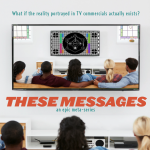
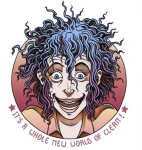
Today’s archival upload includes three PDFs related to a television series concept I developed called These Messages—something I poured my heart and soul into for several years. It never quite broke through, but not for lack of effort or investment. I spent countless hours (and more money than I’d care to admit) climbing the ranks of what I’ve come to see as the cottage industry known as script coverage: professional readers, endless feedback loops, competitions with entry fees, and perpetual carrot-dangling. In the end, most of this amounted to precisely nothing—though I did receive some genuine encouragement along the way. One of the better-regarded coverage platforms, the Black List, awarded my pilot script a “7” rating, just shy of the coveted “8” that might’ve landed it on their influential annual list (a known gateway to actual production). I also had two or three truly enthusiastic readers from various competitions—one called it one of the best scripts he’d ever read—yet, inevitably, it always came with notes and qualifiers. I’m not trying to say I was robbed or that my show unequivocally deserved to be made…but, frankly, I think it’s pretty goddamn spectacular. It’s innovative, ambitious, and would have made a groundbreaking series. Of course, you can judge for yourself. Included in this upload is the latest draft of the pilot script, along with the comprehensive series bible—a serious undertaking that involved commissioning three different artists for added visual flair. The most elaborate of these commissions (and certainly the most expensive) was a three-page comic illustrating the pilot’s teaser. Sadly, I ultimately removed this comic from the bible. Despite the artist’s beautiful style, it inadvertently undermined the intended tone—people interpreted the visuals as humorous, whereas the script itself is deeply unsettling, precisely as intended. I was probably too close to the project at the time to see that clearly, but at least now it’s finally seeing the light of day here in the archive. On a more personal note, I want to wish a happy birthday to my sister, Maisie—she turns 50 today, believe it or not. Happy birthday, Maisie! And finally, some deeply sad and surreal news: rest in peace, Rob Reich. I’m still processing this; I only learned earlier today that Rob passed away suddenly. Rob was an extraordinarily talented composer, musician, and genuinely wonderful person. We became close friends—at least as close as Rob would let anyone get—when we were composition majors together at Oberlin. He was one of the main reasons I moved to Oakland after graduating, since he’d relocated there a year ahead of me. We became roommates for about two and a half years, and he was part of My Hero—I was the one who brought him into the band. What makes Rob’s passing feel even more surreal, beyond the immediate grief, is that just yesterday I typed his name into the metadata for “Deep Feelings,” the track I uploaded last night. In the extended notes, I wrote extensively about my complicated relationship with Stikman—who has also passed away—and spoke about missing him deeply. And then, today, I learned of Rob’s death. Honestly, I’m still at a loss. It hasn’t fully registered yet, but I’ve clearly reached an age where people I know and love can suddenly just be gone. I don’t use social media at all anymore, but thankfully a few friends who still remember I exist reached out to let me know. Rob and I had exchanged only a handful of emails in the eight years since I moved overseas. In fact, my last interaction with him, as I discovered today, was exactly six years ago this month—in May 2019. Rob had randomly emailed me after hearing an album that reminded him of me: Sonorities, by John Lewis of the Modern Jazz Quartet, a fascinating hybrid of avant-garde jazz and orchestral music. I listened to some of it today, thinking of Rob. Rob Reich was extraordinary. I still can’t quite believe he’s gone. Memories are flooding back now—like the time I substituted for him, driving all around the Bay Area to give lessons to his music students. I remember thinking, “I can’t believe Rob does this every day.” And how much I envied his talent: his perfect pitch, his effortless musicianship—though I now realize it only looked effortless because he worked tirelessly at it. He truly was one of the most gifted musicians I’ve ever known. I’ll be uploading some of our collaborations soon, to honor and celebrate Rob’s incredible musicianship and creativity. Until then, rest in peace, Rob. You’re deeply missed.
These Messages, Maisie's 50th, and Remembering Rob
Today’s archival upload includes three PDFs related to a television series concept I developed called These Messages—something I poured my heart and soul into for several years. It never quite broke through, but not for lack of effort or investment. I spent countless hours (and more money than I’d care to admit) climbing the ranks of what I’ve come to see as the cottage industry known as script coverage: professional readers, endless feedback loops, competitions with entry fees, and perpetual carrot-dangling. In the end, most of this amounted to precisely nothing—though I did receive some genuine encouragement along the way.
One of the better-regarded coverage platforms, the Black List, awarded my pilot script a “7” rating, just shy of the coveted “8” that might’ve landed it on their influential annual list (a known gateway to actual production). I also had two or three truly enthusiastic readers from various competitions—one called it one of the best scripts he’d ever read—yet, inevitably, it always came with notes and qualifiers. I’m not trying to say I was robbed or that my show unequivocally deserved to be made…but, frankly, I think it’s pretty goddamn spectacular. It’s innovative, ambitious, and would have made a groundbreaking series. Of course, you can judge for yourself.
Included in this upload is the latest draft of the pilot script, along with the comprehensive series bible—a serious undertaking that involved commissioning three different artists for added visual flair. The most elaborate of these commissions (and certainly the most expensive) was a three-page comic illustrating the pilot’s teaser. Sadly, I ultimately removed this comic from the bible. Despite the artist’s beautiful style, it inadvertently undermined the intended tone—people interpreted the visuals as humorous, whereas the script itself is deeply unsettling, precisely as intended. I was probably too close to the project at the time to see that clearly, but at least now it’s finally seeing the light of day here in the archive.
On a more personal note, I want to wish a happy birthday to my sister, Maisie—she turns 50 today, believe it or not. Happy birthday, Maisie!
And finally, some deeply sad and surreal news: rest in peace, Rob Reich.
I’m still processing this; I only learned earlier today that Rob passed away suddenly. Rob was an extraordinarily talented composer, musician, and genuinely wonderful person. We became close friends—at least as close as Rob would let anyone get—when we were composition majors together at Oberlin. He was one of the main reasons I moved to Oakland after graduating, since he’d relocated there a year ahead of me. We became roommates for about two and a half years, and he was part of My Hero—I was the one who brought him into the band.
What makes Rob’s passing feel even more surreal, beyond the immediate grief, is that just yesterday I typed his name into the metadata for “Deep Feelings,” the track I uploaded last night. In the extended notes, I wrote extensively about my complicated relationship with Stikman—who has also passed away—and spoke about missing him deeply. And then, today, I learned of Rob’s death. Honestly, I’m still at a loss. It hasn’t fully registered yet, but I’ve clearly reached an age where people I know and love can suddenly just be gone.
I don’t use social media at all anymore, but thankfully a few friends who still remember I exist reached out to let me know. Rob and I had exchanged only a handful of emails in the eight years since I moved overseas. In fact, my last interaction with him, as I discovered today, was exactly six years ago this month—in May 2019. Rob had randomly emailed me after hearing an album that reminded him of me: Sonorities, by John Lewis of the Modern Jazz Quartet, a fascinating hybrid of avant-garde jazz and orchestral music. I listened to some of it today, thinking of Rob.
Rob Reich was extraordinary. I still can’t quite believe he’s gone. Memories are flooding back now—like the time I substituted for him, driving all around the Bay Area to give lessons to his music students. I remember thinking, “I can’t believe Rob does this every day.” And how much I envied his talent: his perfect pitch, his effortless musicianship—though I now realize it only looked effortless because he worked tirelessly at it. He truly was one of the most gifted musicians I’ve ever known.
I’ll be uploading some of our collaborations soon, to honor and celebrate Rob’s incredible musicianship and creativity. Until then, rest in peace, Rob. You’re deeply missed.
Today I’m doing my best to stick to the plan: archival entry number two is underway, hot on the heels of last night’s sizable debut. And already, I have to admit—after the initial push of these bulk uploads—I’m looking forward to slowing down to a steadier, one-a-day pace. Turns out digitizing your life’s work is tedious. Who knew? I’ve also started encountering a few bugs—nothing catastrophic, thankfully, but noticeable nonetheless. My auto-formatting for archive entries is a bit clunky (fixable), and I’ve discovered the post-upload editor is slightly awkward (also fixable, but less easily so). This, I suppose, is the price of ambition: when you build a needlessly complicated uploader from scratch, you get a needlessly complicated debugging experience. On the bright side, I’ve now officially used every single feature I designed, so at least I can confirm they mostly do what they’re supposed to. As for today’s archival content: I’ll be uploading a little song I wrote during my time at LeapFrog, along with whatever else surfaces from a random dive into several unsorted desktop folders. Should be interesting.
Playing Catsup
Today I’m doing my best to stick to the plan: archival entry number two is underway, hot on the heels of last night’s sizable debut. And already, I have to admit—after the initial push of these bulk uploads—I’m looking forward to slowing down to a steadier, one-a-day pace. Turns out digitizing your life’s work is tedious. Who knew?
I’ve also started encountering a few bugs—nothing catastrophic, thankfully, but noticeable nonetheless. My auto-formatting for archive entries is a bit clunky (fixable), and I’ve discovered the post-upload editor is slightly awkward (also fixable, but less easily so). This, I suppose, is the price of ambition: when you build a needlessly complicated uploader from scratch, you get a needlessly complicated debugging experience. On the bright side, I’ve now officially used every single feature I designed, so at least I can confirm they mostly do what they’re supposed to.
As for today’s archival content: I’ll be uploading a little song I wrote during my time at LeapFrog, along with whatever else surfaces from a random dive into several unsorted desktop folders. Should be interesting.

From February 1st through March 31st, 2025, every spare moment I could scrape together went into building this website from scratch. The goal was straightforward: create a place to archive and share my creative output as easily as possible, because historically, I haven’t exactly been diligent about documenting finished projects. In true form, as soon as the site was “finished” (a loaded term, given my habit of perpetual tinkering), I immediately abandoned it. So here we are, exactly a month and a half later—May 15th, 2025—attempting the very first actual archival entry. The irony isn’t lost on me: I built a complex, hand-coded system intended specifically to streamline archiving, only to promptly forget how most of it works. Does anyone else care about this? Probably not. But that’s the thing—no one else is holding me accountable. Luckily, self-imposed obligations are easy enough to renegotiate. It’s just me and whatever stubborn impulse drove me to spend two months coding a site I’d almost immediately neglect. Anyway, here we are. Welcome to the archive.
Habitual Spontaneity
From February 1st through March 31st, 2025, every spare moment I could scrape together went into building this website from scratch. The goal was straightforward: create a place to archive and share my creative output as easily as possible, because historically, I haven’t exactly been diligent about documenting finished projects.
In true form, as soon as the site was “finished” (a loaded term, given my habit of perpetual tinkering), I immediately abandoned it.
So here we are, exactly a month and a half later—May 15th, 2025—attempting the very first actual archival entry. The irony isn’t lost on me: I built a complex, hand-coded system intended specifically to streamline archiving, only to promptly forget how most of it works.
Does anyone else care about this? Probably not. But that’s the thing—no one else is holding me accountable. Luckily, self-imposed obligations are easy enough to renegotiate. It’s just me and whatever stubborn impulse drove me to spend two months coding a site I’d almost immediately neglect.
Anyway, here we are. Welcome to the archive.